
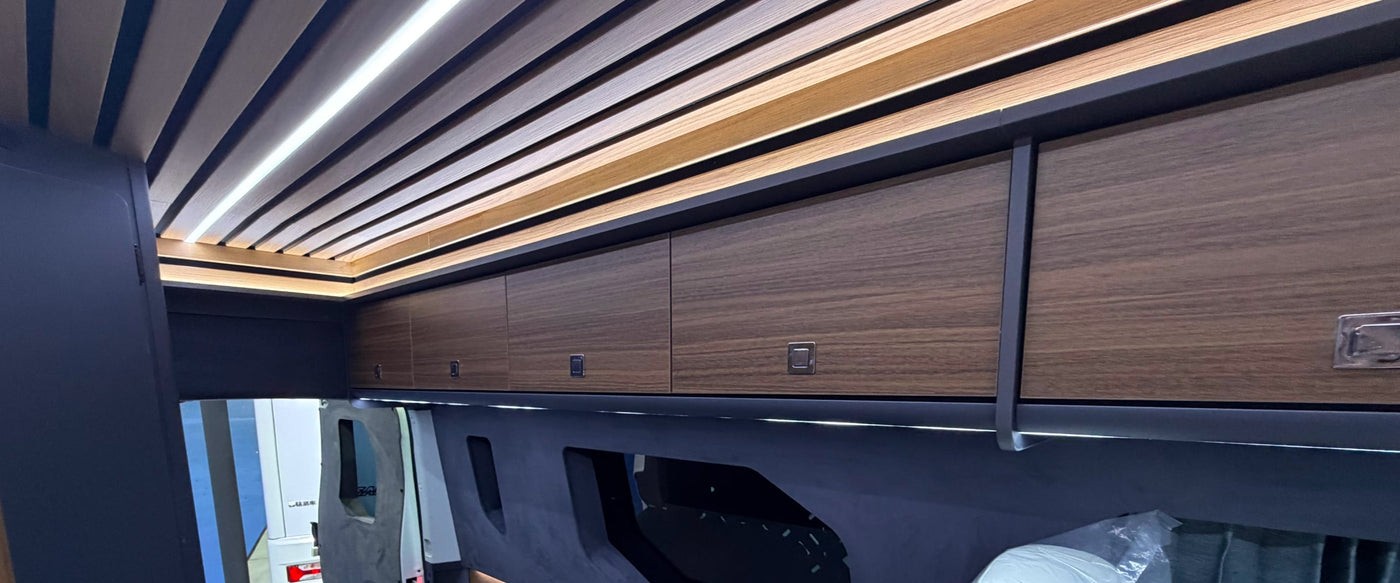


Kernmaterialoptionen für Decken
-

Akustikplatten aus Polyesterfasern
Diese funktionalen Dekorationspaneele sind bei der Schalldämmung hochwirksam, mit einem Schalldämmwert (NRC) von 0,8 bis 1,10.
-

GMT-Paneele
Sie sind 50 % leichter als Holz, bieten eine hervorragende Schallabsorption und delaminieren weder bei Erhitzung noch bei Laminierung.
-

Kühlergrills
Bestehend aus einer GMT-Grundplatte und PET-Schaumstofflamellen, bieten diese eine einzigartige Ästhetik für Wohnmobil-Decken. Sie bieten hervorragende Leistung in Belüftung, Beleuchtung, Wärmeableitung und Schallabsorption.
-

PET-Schaumstoffplatten
Diese geschlossenzelligen Polymerschaumplatten werden häufig für Fahrzeughimmel und Dachpaneele in Zügen verwendet. Sie bieten eine hohe thermische Stabilität, hervorragende FST-Eigenschaften und sind zu 100 % recycelbar.


Häufig gestellte Fragen
Wie werden Akustikplatten aus Polyesterfaser in Wohnmobilen installiert?
Wie werden Akustikplatten aus Polyesterfaser in Wohnmobilen installiert?
Polyesterfaser-Akustikplatten werden in Wohnmobilen hauptsächlich durch Klebenmit Bauklebstoff installiert.
Sie dienen als dekorative Wandverkleidung und werden auch häufig für Dachhimmel verwendet.
Wie ist die Umweltverträglichkeit der Akustikpaneele einzuschätzen?
Wie ist die Umweltverträglichkeit der Akustikpaneele einzuschätzen?
BIGBAHN Polyesterfaser-Akustikplatten erfüllen die Anforderung der Güteklasse E1 nach nationalem Standard GB18580‑2001.
Die Formaldehydemission wird mit 0,05 mg/L (oder 0,05 mg/m³) gemessen, was deutlich unter dem E1-Grenzwert von ≤1,5 mg/L liegt.
Während die kernholzbasierenden BIGBAHN-Sperrholzplatten typischerweise die strengeren ENF- oder E0-Güten erreichen, sind die Polyesterfaser-Akustikplatten eindeutig als E1 eingestuft – und die tatsächlichen Prüfwerte sind extrem niedrig, was eine gesunde Raumluftqualität für Wohnmobilkabinen gewährleistet.
Welche weiteren Funktionen bieten die Akustikpaneele neben der Umweltfreundlichkeit?
Welche weiteren Funktionen bieten die Akustikpaneele neben der Umweltfreundlichkeit?
Sie werden hauptsächlich zur Dekoration von Wohnmobilseitenwänden und auch häufig in Dachhimmeln verwendet.
Zu den wichtigsten Materialvorteilen gehören:
- Geringes Gewicht
- Hervorragende mechanische Leistung (hohe Zähigkeit, Schlagfestigkeit, Reißfestigkeit)
- Große Plattenabmessungen (z.B. 9×1220×2440 mm)
Diese Eigenschaften ermöglichen eine einfache Installation. Die Platten werden typischerweise durch Kleben mit Strukturklebstoff befestigt.
Zusätzlich bieten Gitterplatten (bestehend aus einer GMT-Grundplatte und PET-Schaumlamellen), die auch eine hervorragende Schalldämmung und Geräuschreduzierung bieten, die gleichen einfach zu installierenden Eigenschaften, wodurch sie ideal für die dekorative und funktionale Verkleidung in Wohnmobilinnenräumen sind.
Was sind die am meisten empfohlenen Materialien für die Deckenverkleidung von Wohnmobilen?
Was sind die am meisten empfohlenen Materialien für die Deckenverkleidung von Wohnmobilen?
Zu den primären Optionen gehören Polyesterfaser-Akustikplatten, GMT (Glasmatten-verstärkte Thermoplast)-Platten, PET-Schaumplatten und Gitterplatten.
Für ein traditionelleres Aussehen bei extremer Gewichtseinsparung werden auch AeroTek-Verbundplatten oder leichtes Sperrholz mit OPP-Folie verwendet.
Warum sind Akustikplatten aus Polyesterfasern für Decken so beliebt?
Warum sind Akustikplatten aus Polyesterfasern für Decken so beliebt?
Diese Platten sind als Schallabsorber hochwirksam, mit einem Schallabsorptionsgrad (NRC) zwischen 0,8 und 1,10.
Sie bieten außerdem eine Wärmedämmung, sind gleichmäßig und robust und außergewöhnlich leicht, was entscheidend ist, um das Oberlastgewicht des Fahrzeugs zu reduzieren.
Wie werden Polyesterpaneele an einer Decke montiert?
Wie werden Polyesterpaneele an einer Decke montiert?
Im Gegensatz zu Holzpaneelen, die Schrauben benötigen, werden Polyesterpaneele mit Klebstoffen, insbesondere Strukturkleber, angebracht.
Da sie leicht sind und keine „Nagelhalte“-Anforderungen haben, vereinfacht dies den Installationsprozess und reduziert das Risiko, dass sich mechanische Befestigungselemente mit der Zeit lockern.
Sind diese Deckenmaterialien sicher, wenn sie beschädigt werden?
Sind diese Deckenmaterialien sicher, wenn sie beschädigt werden?
Ja.
Polyesterfaserplatten wurden unter dem Aspekt der Sicherheit entwickelt; im Gegensatz zu spröden Materialien wie Gips- oder Zementplatten splittern sie bei einem Aufprall oder Herunterfallen nicht und erzeugen keine scharfen Bruchstücke oder Splitter, wodurch potenzielle Gefahren für Passagiere ausgeschlossen werden.
Welche Vorteile bieten GMT-Platten für Dächer und Decken?
Welche Vorteile bieten GMT-Platten für Dächer und Decken?
GMT-Platten dienen als High-Tech-Ersatz für Aluminium und Sperrholz. Sie sind 50 % leichter als Holz, bieten eine ausgezeichnete Geräuschabsorption und besitzen eine hohe Zugfestigkeit.
Sie sind außerdem resistent gegen Schimmel, Mehltau, Fäulnis und Verformung und gewährleisten so eine langfristige strukturelle Integrität.
Kann ich PET-Schaumplatten für meinen Fahrzeughimmel verwenden?
Kann ich PET-Schaumplatten für meinen Fahrzeughimmel verwenden?
Ja, PET-Schaumplatten werden häufig für Kfz-Dachhimmel und Dachverkleidungen in Zügen verwendet.
Sie sind zu 100 % recycelbar, weisen eine hohe thermische Stabilität auf und erfüllen die FST-Sicherheitsstandards (flammhemmend, raucharm, ungiftig).


