
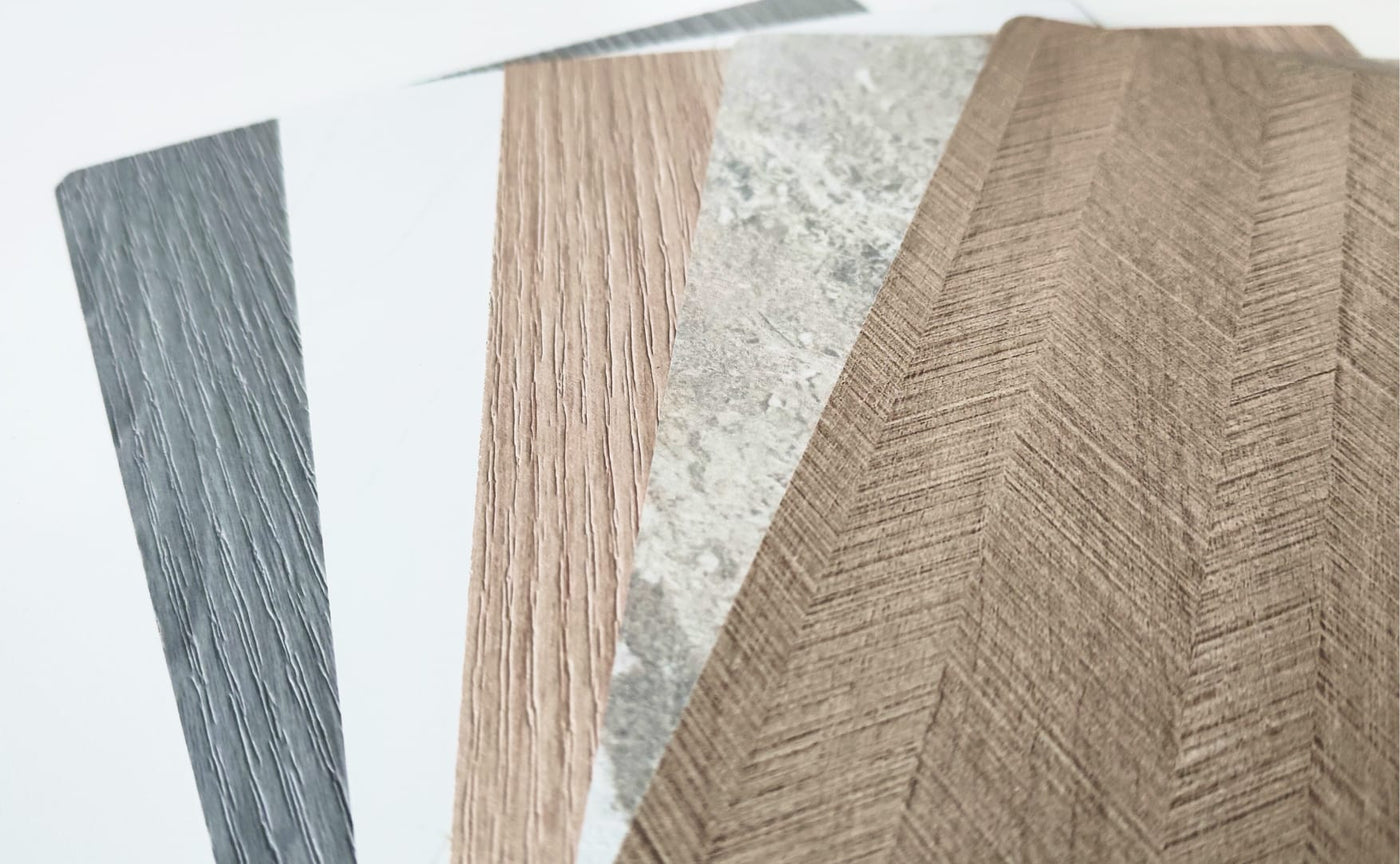


Laminatoptionen
HPL steht für High-Pressure Laminate. Innerhalb des BIGBAHN-Produktsystems wird es auch häufig als „feuerfestes Laminat“ oder „hochdruckdekoratives feuerbeständiges Laminat“ bezeichnet. Dieses Material besteht typischerweise aus mehreren Schichten harzgetränkten Papiers, die während des Herstellungsprozesses unter Temperaturen von über 120 °C und Drücken von über 50 MPa komprimiert und geformt werden, um letztendlich ein dichtes und außergewöhnlich haltbares Material zu bilden.
Fachbegriffe
- Hohe Schlag- und Stoßfestigkeit
- Sehr gute Kratz- und Abriebfestigkeit
- Feuchtigkeits- und Chemikalienbeständigkeit
- Gute Hitzebeständigkeit
- Hygienische, leicht zu reinigende Oberfläche
Anwendung
- Küchenarbeitsplatten
- Tisch- und Arbeitsflächen
- Türen und Aufprallschutz
- Möbelfronten und Innenausbau
Spezifische Oberflächen & Farben
- Weiß Matt
- Weiß Stein
- Grau Flash
- Schwarz Stein glänzend
- Schwarz Stein matt
- Angkor Vat Farbe
- Sand- und Materialoberflächenstrukturen
Während Kompaktlaminat an sich recht schwer ist, wird es in der Wohnmobilindustrie typischerweise als Oberflächenbeschichtung (HPL-Schicht) verwendet. Um das Ziel der Gewichtsreduzierung zu erreichen, wird empfohlen, es auf einen leichten Pappel-Eukalyptus-Kern oder einen PET-Schaumkern zu laminieren, anstatt massive, dicke Kompakt-Laminatplatten zu verwenden.


HPL-Folienspezifikation
| Kernmaterial | Sättigen mehrerer Schichten Kraftpapier mit Phenolharz. |
| Standardgröße | 2440 × 1220 mm / 2500 × 1220 mm (Anpassung) |
| Dickenoptionen | 0,1, 0,5, 0,7, 0,8 mm (Anpassbar) |
| Dichte | 1350–1450 kg/m³ |
| Gewicht pro Platte (1220 × 2440 mm) | 0,7 mm: 2 ± 1 kg |
| Brandverhalten | B2 |
| Beenden | Holzmaserung / Stein / Metallisch |

Technische Grundlagen von Hochdrucklaminat
Hochdrucklaminat (HPL) ist eine technische Dekoroberfläche, die durch das Verschmelzen von Kernschichten aus mit Phenolharz imprägniertem Kraftpapier mit einem bedruckten Dekorpapier, geschützt durch eine transparente Melaminauflage, hergestellt wird.
Unter extremen industriellen Verarbeitungsbedingungen – Temperaturen über 120℃ (248°F) und hydraulische Drücke über 5 MPa (725 psi) – durchlaufen diese duroplastischen Harze eine irreversible Polykondensationsreaktion. Das Ergebnis ist eine porenfreie, hochdichte Platte (1350 - 1450 kg/m3) mit außergewöhnlicher Kratzfestigkeit, Schlagzähigkeit und Chemikalienbeständigkeit.
Während HPL-Platten eine äußerst robuste Außenhaut bieten, hängt ihre strukturelle Nutzbarkeit in mobilen und modularen Innenräumen vom darunterliegenden Substrat ab. Das Verschmelzen von HPL-Oberflächen mit leichten Substraten schafft eine starre, hochfeste Verbundplatte, die schwere, traditionelle Holzprodukte ersetzt. Speziell entwickelte Substrate wie Leichtbau-Sperrholz mit ausgewogenen querfurnierten Pappelhölzern bieten einen dimensionsstabilen Kern, der unter Umweltbelastung Verwerfungen, Verdrehungen und Dickenquellungen widersteht.
Im Vergleich zu alternativen dekorativen Oberflächentechnologien – wie kontinuierlich gepresstem Laminat (CPL), melaminharzbeschichteten Spanplatten (MFC) und direkt bedruckter Thermofolie – zeigt HPL eine klare mechanische Überlegenheit:
HPL-Schichtstoffplatte


HPL-Spezifikation
| Kernmaterial | Dekormaterial: HPL; Kaschierung: PET, Leichtbau-Sperrholz |
| Standardgröße | 2440 × 1220 mm / 2500 × 1220 mm (Anpassung) |
| Dickenoptionen | 2,7, 3, 5, 6, 9, 12, 15, 18, 25, 30 mm (Anpassung) |
| Toleranzen | Länge&Breite: +/-1,5mm, Dicke: +/- 0,3mm |
| Dichte | 150–550 kg/m³ |
| Gewicht pro Platte (1220 × 2440 mm, 150 kg/m3) | 15 mm: 6,69 ± 1 kg; |
| Feuchtigkeitsgehalt | 6-14 % |
| Schraubenfestigkeit (Leichtbau-Sperrholz) | 15 mm Dicke: ca. 740 N; |
| Biegefestigkeit | Leichtes Sperrholz: 15 mm, 54.6 MPa; PET: 15 mm, 20 MPa; |
| Formaldehyd-Qualität | E0 |
| Brandverhalten | B2 |
| Oberflächengüte | Klasse 1 |
| Mindestbestellmenge (MOQ) | 1x20'-GP |
| Zahlungsbedingungen | 30 % Anzahlung, 70 % Restzahlung gegen B/L-Kopie |
| Zertifizierung | FSC, EUTR usw. |
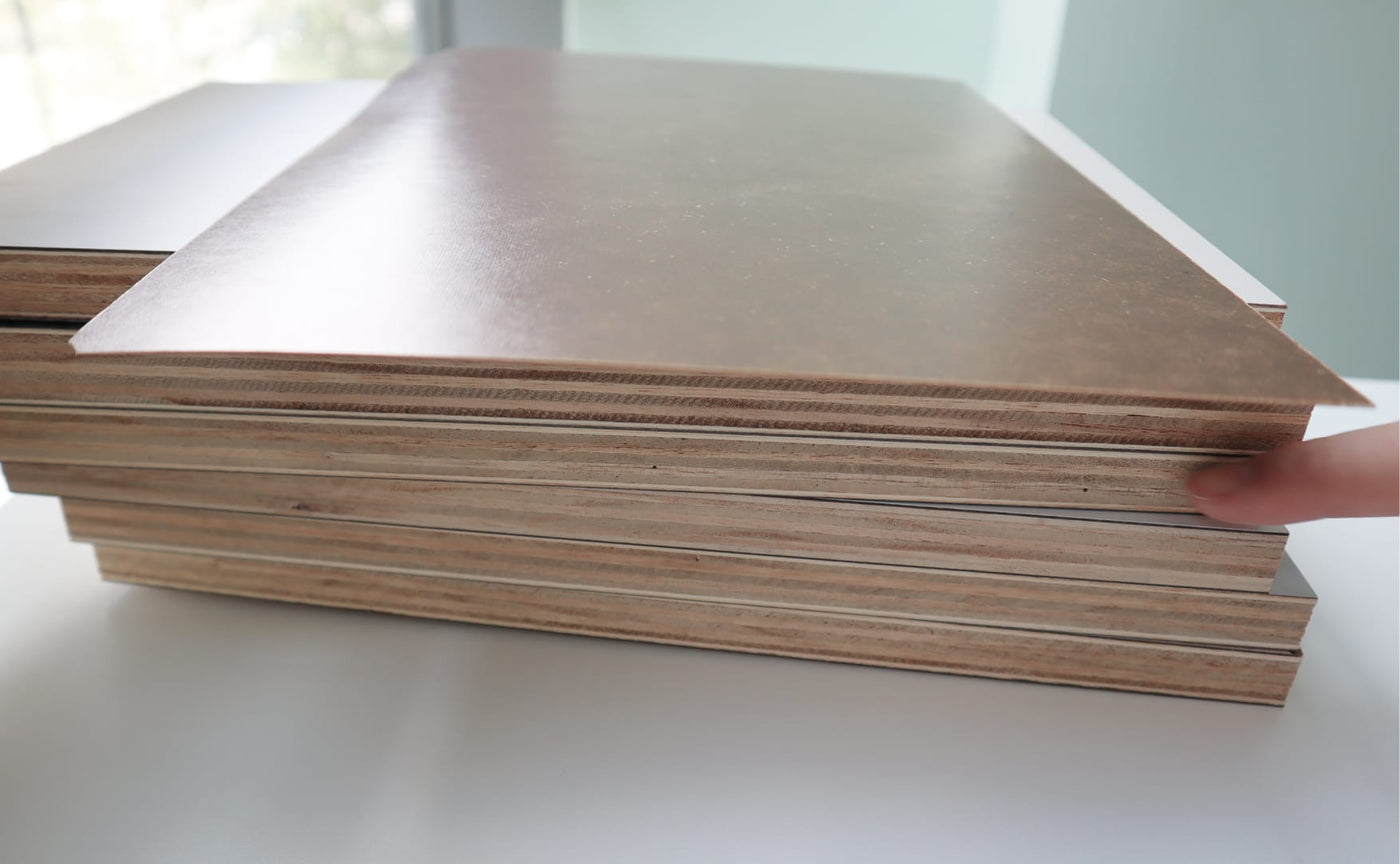
Unterschiede zwischen Kompaktlaminat und HPL
| HPL | Kompaktlaminat |
|---|---|
| Dünnes HPL, HPL-Laminat oder Brandschutzbeschichtung | HPL-Schichtstoffplatten, Kompaktplatten oder Volllaminatplatten |
| 0,1 mm - 0,8 mm | üblicherweise >2 mm, bis zu 25 mm |
| Wird hauptsächlich zur Oberflächenveredelung von Schranktüren, Wandpaneelen und Möbeln verwendet, um Kratz- und Feuerbeständigkeit zu gewährleisten. | Ideal für strapazierfähige horizontale Oberflächen wie Küchenarbeitsplatten, Esstische und Waschbecken in Wohnmobilen, wo eine hohe Schlag- und Wasserbeständigkeit erforderlich ist. |
| Erfordert eine Kantenanleimung (wie T-Leisten oder flache Kantenbänder). | Die Kanten sind homogen und können direkt, ohne Kantenanleimung, freigelegt und poliert werden. |
| Wenn Sie eine „Haut“ für Ihre Schränke benötigen, wählen Sie Thin HPL. | Wenn Sie eine grundsolide, wasserdichte Arbeitsplatte ohne Trägerplatte benötigen, wählen Sie Kompaktlaminat. |
Unsere Handwerkskunst
-

PUR-Schmelzklebstoff-Flachlaminierung
Diese PUR-Klebverbindung arbeitet zuverlässig über einen weiten Temperaturbereich von -40℃ bis +120℃(-40℉ bis +248℉). Sie ist beständig gegen Feuchtigkeit, Lösungsmittel und Hitze und gewährleistet, dass die dekorative HPL-Oberfläche unter extremen Umgebungsbedingungen nicht delaminiert, Blasen wirft oder sich verformt.
-

Technische Lösungen für Feuchtgebiete
Nasszellen in Campervans, Bordküchen und Duschkabinen in Wohngebäuden – herkömmliche Holzkernplatten sind anfällig für Fäulnis, Pilzbefall und Dickenquellung. In diesen kritischen Bereichen bietet das Klebeverfahren von ultraleichten, zu 100 % geschlossenzelligen PET-Schaumstoffplatten vollständige Feuchtigkeitsbeständigkeit.
-

8-Achsen staubfreies CNC-Fräsen
Die Verarbeitungsanlagen nutzen industrielle CNC-Bearbeitung, die mit staubfreien 8-Achsen-CNC-Fräsen ausgestattet ist.
- Die Oberflächenfasern werden zum Kernzentrum hin nach innen gezogen, wodurch Absplitterungen an der Oberfläche vermieden werden.
- Hochgeschwindigkeits-Staubabsaugung, integriert mit Hochvakuum-Matrix-Tischen, um dünne Materialien zu halten.


Häufig gestellte Fragen
Was ist Hochdrucklaminat (HPL) und warum wird es für Camper-Innenausbauten bevorzugt?
Was ist Hochdrucklaminat (HPL) und warum wird es für Camper-Innenausbauten bevorzugt?
HPL ist eine dekorative Hochdrucklaminatplatte, die durch das Verschmelzen von Kraftpapierschichten mit Phenolharz unter Hitze und Druck entsteht. Sie bietet im Vergleich zu Papier- oder Melaminfolien eine außergewöhnliche Schlag-, Kratz- und Feuchtigkeitsbeständigkeit.
Wie hilft leichtes HPL-Sperrholz Elektro-Wohnmobilen (E-RVs), ihre Reichweite zu erhalten?
Wie hilft leichtes HPL-Sperrholz Elektro-Wohnmobilen (E-RVs), ihre Reichweite zu erhalten?
Schwere E-Wohnmobil-Akkupacks erhöhen das Chassis-Eigengewicht um 300–500 kg.
Die Verwendung von leichtem Sperrholz reduziert die Masse der Innenraumschränke um 40 % und bewahrt die Nutzlastkapazität des Fahrzeugs und die Batteriereichweite. BIGBAHN bietet leichte Sperrholzoptionen an, die speziell für elektrische Fahrgestelle entwickelt wurden.
Worin besteht der Unterschied zwischen der PUR-Schmelzkaschierung und dem herkömmlichen EVA-Kleber?
Worin besteht der Unterschied zwischen der PUR-Schmelzkaschierung und dem herkömmlichen EVA-Kleber?
EVA-Klebstoff ist thermoplastisch, erweicht bei Sommerhitze (>60℃) und verursacht Oberflächenblasen oder Ablösungen. Die PUR-Laminierung bildet eine irreversible chemische Vernetzung, die zuverlässig von -40℃ bis +120℃ funktioniert, ohne sich abzulösen.
Bietet leichtes Sperrholz niedriger Dichte eine ausreichende Schraubenauszugsfestigkeit?
Bietet leichtes Sperrholz niedriger Dichte eine ausreichende Schraubenauszugsfestigkeit?
Ja. Kreuzlaminierte Pappel-Hybridkerne bewahren eine außergewöhnliche strukturelle Integrität, erreichen eine Schraubenausreißfestigkeit von 740 N und eine Biegefestigkeit von 54,6 MPa, um schwere Schrankscharniere während Straßenerschütterungen sicher zu halten.
Wie können Ausstatter verhindern, dass HPL-Oberflächen beim CNC-Schneiden absplittern?
Wie können Ausstatter verhindern, dass HPL-Oberflächen beim CNC-Schneiden absplittern?
Zum Schneiden sollten PCD- oder Vollhartmetall-Kompressionsoberfräser auf industriellen 8-Achsen-CNC-Maschinen verwendet werden. Spiralgeometrien mit Auf- und Abwärtsdrall drücken die Oberflächenfasern nach innen zum Kern hin, wodurch saubere, spanfreie Kanten gewährleistet werden.
Welches Substrat ist am besten für Nasszellen in Wohnmobilen und Pantryküchen geeignet?
Welches Substrat ist am besten für Nasszellen in Wohnmobilen und Pantryküchen geeignet?
Verbundplatten aus 100 % geschlossenzelligem PET-Schaum bieten vollständige Wasserundurchlässigkeit. Für Holzanwendungen besteht wasserdichtes Marine-Sperrholz, das mit WBP-Phenolharzleim verklebt ist, 72-Stunden-Kochwasserprüfungen, ohne zu verrotten oder sich zu delaminieren.
BIGBAHN stellt hochwertige PET-Schaumplatten für Abdichtungsanforderungen her.
Wie verbessern gekrümmte Türverkleidungen die Raumaufteilung von kompakten Campervans?
Wie verbessern gekrümmte Türverkleidungen die Raumaufteilung von kompakten Campervans?
Vorgeformte, gekrümmte Türverkleidungen eliminieren scharfe 90°-Möbelecken. Das verbessert den Raumfluss, verhindert Verletzungen beim Transport und sorgt für ein attraktives, ergonomisches Innenprofil, ohne schwere Holzrahmen hinzuzufügen.
Was ist die typische Vorlaufzeit ab Werk für Großhandelsbestellungen von kundenspezifischen OEM/ODM-Panels?
Was ist die typische Vorlaufzeit ab Werk für Großhandelsbestellungen von kundenspezifischen OEM/ODM-Panels?
Direkte Quellenhersteller bieten vollständige kundenspezifische OEM/ODM-Produktion (Plattendicken von 2,4 mm bis 30 mm, kundenspezifische HPL-Dekore und CNC-Vorbohrungen) mit einer schnellen Werkslieferzeit von 25 bis 30 Tagen für Großbestellungen an.
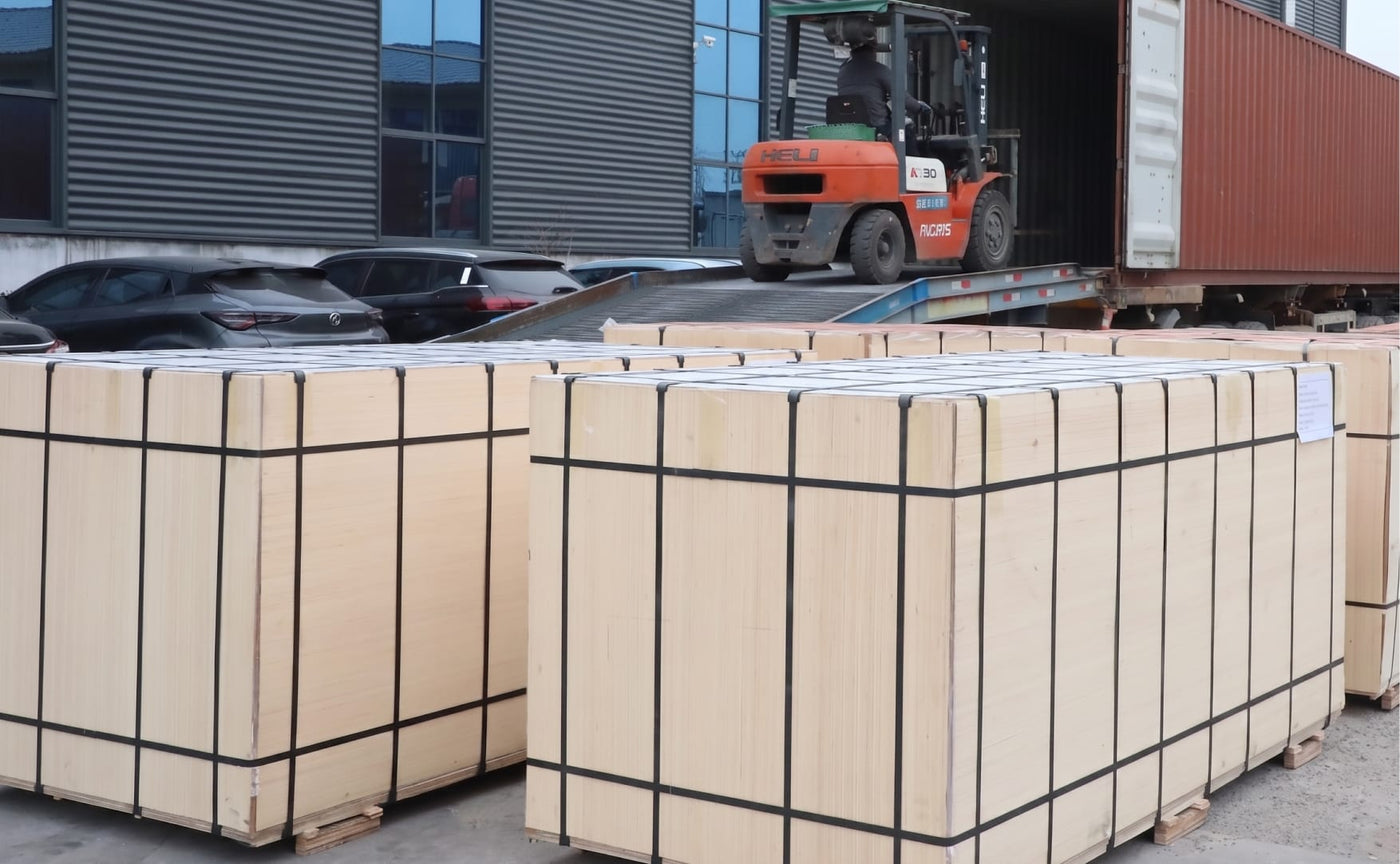
BIGBAHN bietet globalen B2B-Käufern zuverlässige Lieferzeiten und europäischen Lagerbestand.


